Why Blue Belt Feels Like a Plateau in BJJ (and How to Actually Break Through It)
Quick Answer: The blue belt plateau usually happens because early, easy wins (tapping less experienced training partners) stop coming as your training pool shifts to peers who are also improving. Progress hasn’t actually stalled — it’s just become less visible because your comparison group got harder.
White belt felt like constant, visible improvement. Now at blue belt, sessions can feel like treading water, tapping to the same people repeatedly with no obvious forward motion. That feeling is one of the most commonly reported experiences at this exact belt level, and it’s more about perception than an actual stop in growth.

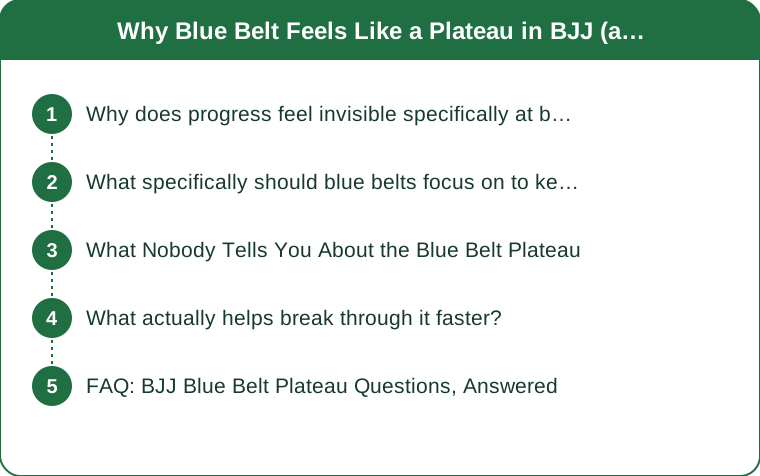
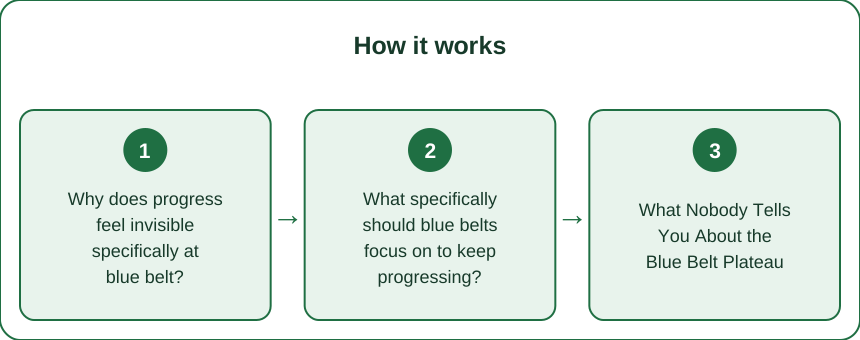
Why does progress feel invisible specifically at blue belt?
At white belt, most training partners are also newer, so technical improvements show up clearly as more frequent wins. At blue belt, you’re increasingly rolling with people of similar or growing skill, which means your relative win rate can flatten even while your absolute skill keeps climbing.
This is a well-documented pattern across BJJ communities — the plateau is largely a measurement problem (using win rate against improving peers as your only signal), not a true stop in skill development.
What specifically should blue belts focus on to keep progressing?
Depth over breadth: rather than continuing to collect new techniques broadly (a white-belt-era strategy), blue belt progress often comes from narrowing focus to 2-3 core positions or sequences and drilling them until they become reliably automatic under live resistance.
Many blue belts who report breaking through the plateau describe deliberately picking a small game (a guard, a pass, a submission chain) and working it obsessively rather than continuing to sample broadly.

What Nobody Tells You About the Blue Belt Plateau
Here’s the part rarely said directly: the blue belt plateau is largely universal, not a sign of a training gap specific to you. It’s discussed so consistently across gyms and instructors that it functions almost as a known stage of BJJ development, similar to how language learners hit a predictable intermediate plateau.
Knowing that reframes the frustration — it’s less ‘something is wrong with my training’ and more ‘this is the expected shape of the middle of a long curve.‘
What actually helps break through it faster?
Specific positional sparring (starting every round from a fixed position — say, closed guard — rather than always starting standing) accelerates depth in a chosen area faster than open rolling alone. Filming and reviewing rolls periodically also reveals patterns invisible from inside the roll itself.
Setting a narrow, trackable goal (like landing a specific sweep 3x in a week of rolling) gives a concrete signal of progress that a general ‘am I winning more’ feeling doesn’t provide.
FAQ: BJJ Blue Belt Plateau Questions, Answered
How long does the blue belt plateau typically last?
It varies widely, but many practitioners describe a noticeable shift within 6-12 months of deliberately narrowing focus to specific positions, rather than the plateau itself having a fixed universal length.
Is it normal to consider quitting during this stage?
It’s a commonly reported feeling at this exact belt level — recognizing it as a known stage rather than a personal failure often helps practitioners push through rather than quit.
Should I add more classes per week to break through faster?
More volume can help, but many practitioners find that narrowing focus (positional sparring, specific goals) matters more than simply adding hours.
TL;DR:
- The blue belt plateau is largely a measurement problem — your training partners are improving too
- It’s a widely discussed, near-universal stage, not a sign your training specifically has stalled
- Narrow focus to 2-3 core positions rather than continuing to sample techniques broadly
- Positional sparring and filming rolls reveal progress a general ‘am I winning’ feeling can’t
Pick one position to obsess over this month and track a specific, narrow goal within it.
Keep Reading
This article is for general informational and styling purposes only. Fit, sizing, and product availability may vary.