BJJ Finger Pain: Why It Starts and How to Keep Training
Quick Answer: Most BJJ finger pain comes from the collar and sleeve grips loading the finger joints and the pulley system in the fingers at extreme angles under high force. It usually settles with buddy taping, switching to gripping with four fingers rather than deep hooks, and cutting gi rounds - not with rest alone, since it returns the moment you grip again. Sharp pain with swelling at a single joint is different and needs assessing.
Every grappler eventually meets this. Six months in, you notice you cannot open a jar, your fingers are stiff for the first hour of the morning, and one knuckle is visibly bigger than its opposite number. This is extremely common, and it is not something you simply have to accept in the form it usually arrives.
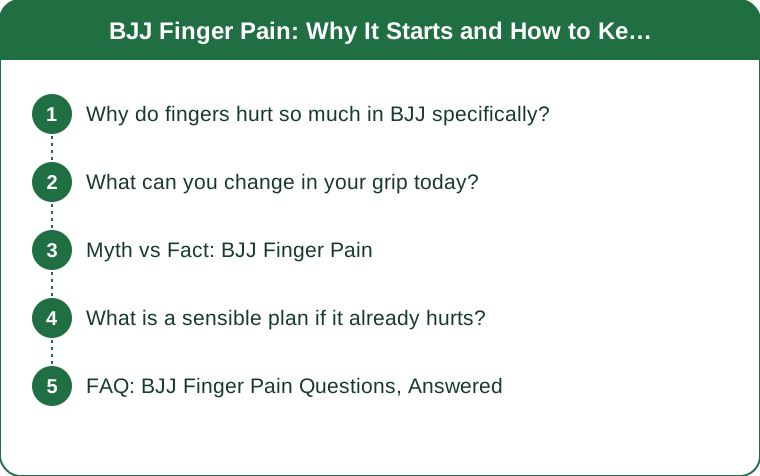
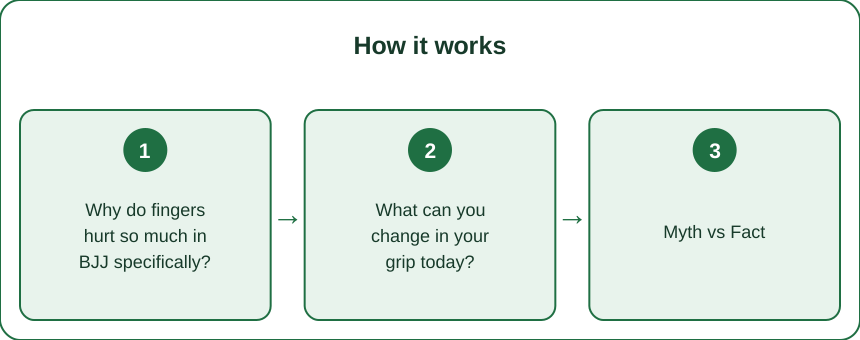
Why do fingers hurt so much in BJJ specifically?
Gi grappling asks the fingers to do something almost nothing else does: hold maximal isometric tension while the joint is at the end of its range and being actively pulled against.
A collar grip is a deep hook - the fingers curl into a thick, stiff fabric and then someone pulls their whole bodyweight against it. The load goes through the small joints of the fingers and through the pulley system that holds the flexor tendons against the bone. Climbers get the same injuries for the same reason, and climbing has a substantial literature on it that grappling largely lacks.
Three things make it worse in BJJ than in climbing:
You cannot control when the load arrives. A climber chooses the hold. In a scramble, your finger is loaded in whatever position it happened to be in.
The gi is stiff and thick. A new, heavy gi forces the fingers wider and puts more strain on the joints than a soft worn one.
Rounds are long and grips are constant. Five-minute rounds with near-continuous gripping is a large volume of isometric work for small structures, repeated several times a session.
The result is a mixture of joint capsule irritation, tendon and pulley strain, and eventually the thickened, permanently larger knuckles that experienced gi players tend to have.
What can you change in your grip today?
These are ordered by how much they reduce load relative to how much they cost you in effectiveness.
Stop using deep single-finger or two-finger hooks. A grip where one or two fingers take the whole load in a deeply curled position is the highest-risk grip in the sport. Spread the load across four fingers wherever you can.
Grip less deeply on the collar. A grip using the first two segments of the fingers loads the joints far less than one buried to the palm. It is slightly weaker and it is worth it.
Grip the sleeve as a pinch rather than a hook where the position allows, since a pinch loads the thumb and the pad rather than curling the finger joints under tension.
Let go earlier. The instinct to hold a grip while someone rips it away is where a lot of acute injuries happen. Losing the grip costs you a position. Keeping it can cost you three months.
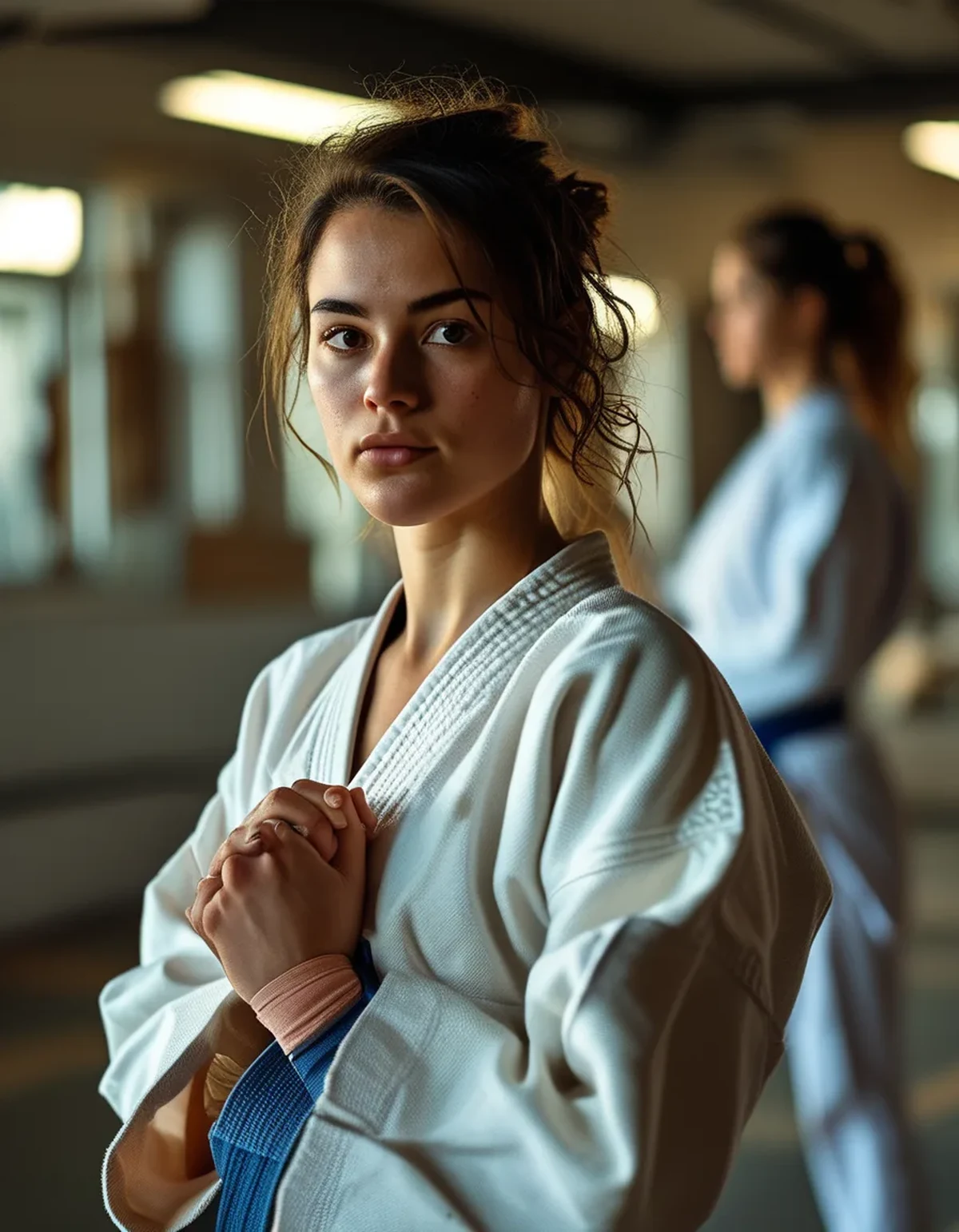
Buddy tape the painful finger to its neighbour rather than taping the joint alone. Taping two fingers together shares the load and limits the sideways splay that irritates the joint capsule. Tape below and above the joint, firmly enough to support and loosely enough that the fingertip does not go pale.
Rotate more no-gi rounds in. No-gi removes the deep hook entirely. If your fingers are the limiting factor, a few weeks weighted toward no-gi keeps you training while the tissue settles.
Myth vs Fact: BJJ Finger Pain
Myth: Big swollen knuckles are just what BJJ hands look like. Fact: They are extremely common in long-term gi players, but they are the result of repeated joint irritation rather than an inevitability. Grip changes early meaningfully affect how your hands look and feel at ten years in.
Myth: Resting fixes it. Fact: Rest reduces the pain and the moment you resume the same grips, it returns. Rest without changing the grip is a pause, not a solution.
Myth: Grip strength training will protect your fingers. Fact: General grip work builds the forearm muscles, which is useful, but it does not directly strengthen the joint capsules and pulleys taking the load. It can also add volume to already-irritated tissue. Fix the grips first, then train grip.
Myth: Taping is for people who are already injured. Fact: Prophylactic buddy taping on the fingers you know get loaded hardest is a reasonable habit well before anything hurts, especially on gi days.
Myth: If you can still grip, it is not a real injury. Fact: Pulley injuries and joint capsule sprains frequently allow near-full grip strength while progressively worsening. The ability to grip is not a useful test.
This is general information, not medical advice. Sudden sharp pain, an audible pop during a grip, visible swelling at one joint, or a finger that will not straighten needs a professional assessment rather than more tape.
What is a sensible plan if it already hurts?
Week 1 to 2: reduce the load without stopping. Buddy tape, shallow grips only, no deep collar hooks, and roughly half your rounds no-gi. Most people find this alone reduces the morning stiffness noticeably.
Alongside that, do gentle range-of-motion work daily. Slow full fist to full extension, ten to fifteen repetitions, two or three times a day. Movement without load helps a joint capsule considerably more than immobilising it does.
Week 3 onwards, if it is settling: add light loaded work. Squeezing a soft ball or a light gripper for high repetitions, staying well below anything that provokes pain. The aim is tolerance, not maximum strength.
Return to deep grips last, and gradually. One or two rounds of full gi gripping per session before going back to all of them.
Things worth doing regardless: warm your hands up before rolling rather than gripping cold, wash and soften your gi so it is less rigid, and cut your nails short so you are not forced into awkward grip positions to avoid catching them.
And check the honest question: if you cannot train gi at all without pain after four to six weeks of doing the above, that is your answer to see a hand specialist. Finger pulley and joint problems respond well to early management and considerably less well to eighteen months of hoping.
FAQ: BJJ Finger Pain Questions, Answered
Why do my fingers hurt after BJJ?
Most commonly from deep collar and sleeve grips loading the small finger joints and the flexor pulleys at end range under a partner’s full bodyweight. Stiffness that is worst in the morning and eases with movement is the typical pattern for joint capsule irritation.
Should I tape my fingers for BJJ?
Buddy taping the painful finger to its neighbour is the most useful version, since it shares load and limits sideways splay. Taping a single joint in isolation does less. Prophylactic taping on gi days is reasonable even before anything hurts.
Can I keep training with sore fingers?
Usually yes, with modifications - shallow grips, no deep hooks, buddy tape, and a higher proportion of no-gi rounds. Sharp pain, a pop during a grip, swelling at one joint, or a finger that will not fully straighten means stop and get it assessed.
Do BJJ fingers get permanently damaged?
Thickened knuckles and reduced fine range are common in long-term gi players, largely from repeated joint irritation. Changing grip habits early - four-finger grips, shallower hooks, letting go sooner - meaningfully changes that trajectory.
TL;DR:
- Gi grips load small finger joints and pulleys at end range under a partner’s full bodyweight.
- Deep one and two-finger hooks are the highest-risk grip in the sport - spread load across four fingers.
- Buddy tape the sore finger to its neighbour rather than taping a joint alone.
- Rest without changing your grips is a pause, not a fix - the pain returns on the first gi round.
- Weight your rounds toward no-gi for a few weeks to keep training while tissue settles.
- A pop, swelling at one joint, or a finger that will not straighten is a stop-and-assess signal.
Letting go of a grip a second earlier costs you a position. Holding it can cost you a season.
Keep Reading
This article is for general informational and styling purposes only. Fit, sizing, and product availability may vary.