From First Class to First Stripe: The White Belt's Honest Roadmap
BJJ’s first year has a shape nobody explains at signup: months of glorious confusion, then patterns, then the first stripe on the belt — a strip of tape that means more than outsiders could guess. The white belt’s honest roadmap, phase by phase.


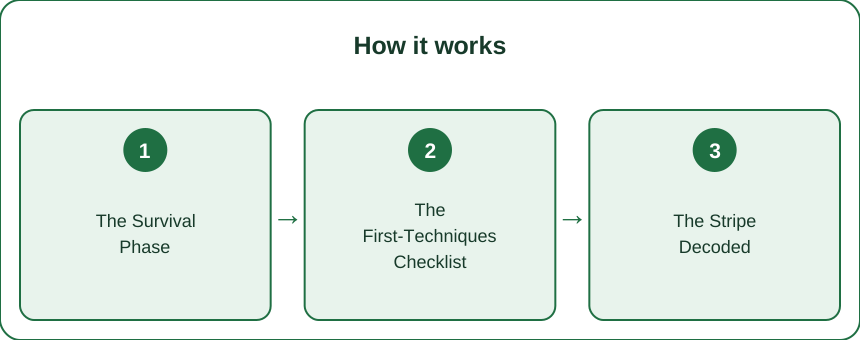
The Survival Phase
Months one-to-three, truthfully: the goal is showing up and surviving rounds (not winning them — white belts don’t win rounds; they collect experiences), the confusion is the curriculum (every roll feels like drowning politely — this is universal and temporary; the sport has a vocabulary and you’re pre-literate), the two actual skills of the phase (learning to relax under pressure — the panic-spending of energy is the beginner tax — and tapping early and often; the tap is a reset button, not a defeat), and the body adaptation (grip soreness, mat burn, muscles with no names — the DOMS chapter of a new language).
The First-Techniques Checklist
What sticks first (the white-belt canon): the shrimp and bridge (the movements under every escape — drilled forever because they ARE the sport), two escapes (mount escape and side-control escape — survival’s technical wing), one sweep from guard, one submission you actually understand (usually the armbar or rear-naked choke — understood beats collected; the technique-hoarding instinct serves nobody), and the closed-guard basics (the position where beginners learn to think). Depth over inventory: five techniques you own beat fifty you’ve met.

The Stripe Decoded
What the tape means: stripes mark time-plus-progress (typically a few months of consistent training each — attendance, safety as a partner and the basics settling in; the criteria vary by gym and the coach sees more than you think), the first stripe’s real signal (‘you kept showing up through the hardest part’ — the drop-off rate before first stripe is the sport’s open secret; surviving the survival phase IS the achievement), and the comparison ban (stripes arrive on different schedules for different bodies and calendars — the only belt that matters is yours, aging honestly).
The Habits That Compound
The white-belt multipliers: consistency beats intensity (two-to-three classes weekly, every week, outruns the five-class binge-and-vanish — the tissue and the technique both prefer rhythm), the question habit (upper belts LIKE being asked — the one-question-per-class rule turns rolls into lessons), the notebook (three lines after class: what worked, what didn’t, one question — the retention doubles), and the roll-selection wisdom (partners who control beat partners who crush — seek the smooth upper belts; the gym’s best teachers often wear brown). The stripe was never tape — it’s a receipt for the hardest months, paid in attendance.
Survive first, own five techniques, ask one question per class, keep showing up. The first stripe marks BJJ’s steepest climb — and everyone wearing a black belt once wore your exact confusion.
Keep Reading
This article is for general informational and styling purposes only. Fit, sizing, and product availability may vary.