Why Blue Belt Feels Like Standing Still — and the Specific Fix for the BJJ Plateau
Quick Answer: The blue belt plateau happens because early rapid gains from learning basic positions run out, while higher belts you’re now rolling with have significantly more experience — the fix is shifting from broad technique collection to deep, narrow specialization in 2-3 core positions.
White belt felt like constant discovery — every class, a new sweep or submission clicked. Blue belt feels like getting tapped by the same escapes you thought you’d already learned. That flatline has a name, and nearly every blue belt hits it.

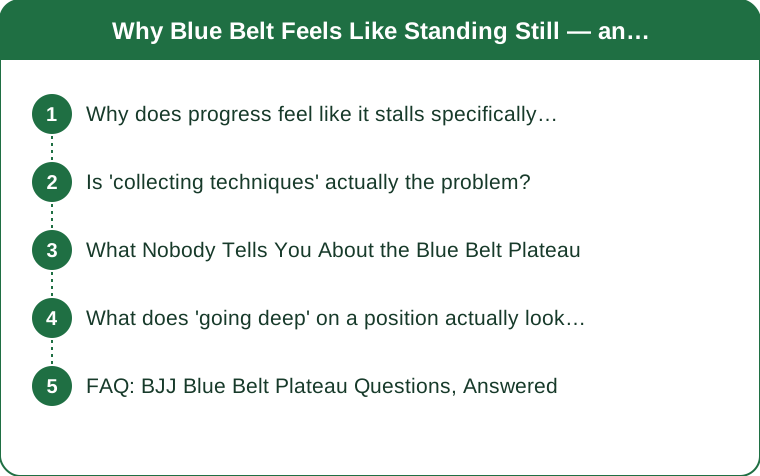
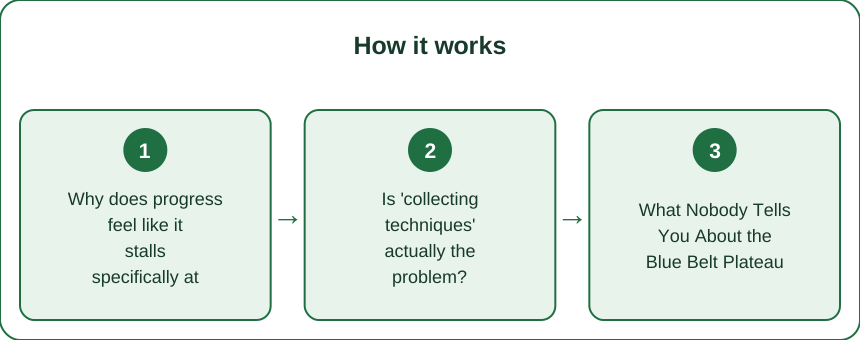
Why does progress feel like it stalls specifically at blue belt?
At white belt, almost any new technique represents real progress because your baseline knowledge is so limited — improvement is fast and constant. By blue belt, you’ve absorbed most fundamental positions, so gains come from refinement and timing, which is a slower, less visually obvious kind of progress.
At the same time, you’re now regularly rolling against higher belts with years more mat time, which makes you feel like you’re losing more, even though your actual skill level has objectively increased significantly since white belt.
Is ‘collecting techniques’ actually the problem?
Often, yes. Many blue belts respond to feeling stuck by learning more new techniques — a wider and wider net of moves, none practiced deeply enough to execute reliably under real resistance.
The more effective shift at this stage is specializing narrowly: picking 2-3 positions (say, closed guard, one specific sweep, and one submission chain from mount) and drilling them repeatedly until they work against resisting partners, rather than adding a fourth new sweep every week.

What Nobody Tells You About the Blue Belt Plateau
Here’s what most gyms don’t say out loud: the blue belt plateau isn’t a sign you’re not talented — it’s the single most common stall point in BJJ, widely enough recognized that it has its own nickname (‘blue belt blues’) across the sport.
Most people who push through it do so not by training harder in volume, but by training narrower — going deep on a small number of positions until they become genuinely reliable, rather than staying wide and shallow across dozens of techniques.
What does ‘going deep’ on a position actually look like in practice?
Pick one position — for example, closed guard. Drill one specific sweep and one specific submission from it, then spend rolling time deliberately trying to set up just those two options against every partner, regardless of whether it works at first.
Track your success rate loosely over weeks: are you landing the sweep more often at week 6 than week 1? That trend, not a new technique count, is the real progress marker at this stage.
FAQ: BJJ Blue Belt Plateau Questions, Answered
How long does the blue belt plateau typically last?
It varies widely, but many practitioners describe it lasting anywhere from several months to over a year before a felt shift in confidence and control — specialization tends to shorten this window.
Should I stop learning new techniques entirely during this phase?
Not entirely — but shift the ratio heavily toward depth over breadth; an occasional new technique is fine as long as it doesn’t replace consistent drilling of your core 2-3.
Is it normal to get tapped more at blue belt than white belt?
Yes — you’re now rolling against significantly more experienced partners, so more taps don’t mean less skill; they reflect a harder training pool, which is itself a sign of progress.
TL;DR:
- Blue belt plateau happens because easy early gains run out while training partners get tougher
- Collecting more techniques usually makes the stall worse, not better
- Specializing in 2-3 core positions and drilling them deeply is the more effective fix
- Track success rate on your chosen positions over weeks, not technique count, as your progress marker
Pick your 2-3 positions this week and commit to them for a full month before adding anything new — that narrowing is the actual unlock most blue belts are missing.
Keep Reading
This article is for general informational and styling purposes only. Fit, sizing, and product availability may vary.