Strength and Conditioning for BJJ: The Off-the-Mat Work That Levels Up Your Game
Quick Answer: BJJ strength training should prioritize grip endurance, pulling strength, and hip and core power — in that order. Two sessions a week is right for most people training BJJ 3–4 times weekly, built around rows, pull-ups, deadlifts, carries, and anti-rotation core work. Keep total weekly hard sessions under control: mat time is the priority, and strength work exists to support it, not compete with it.
You know the roll. Technically you were fine for the first four minutes. Then your grips died, your breathing went, and a blue belt you’d normally handle passed your guard three times.
That wasn’t a technique gap. That was a physical one.
You can’t out-technique fatigue forever — and the off-mat work that fixes it is narrower and less time-consuming than most people assume.
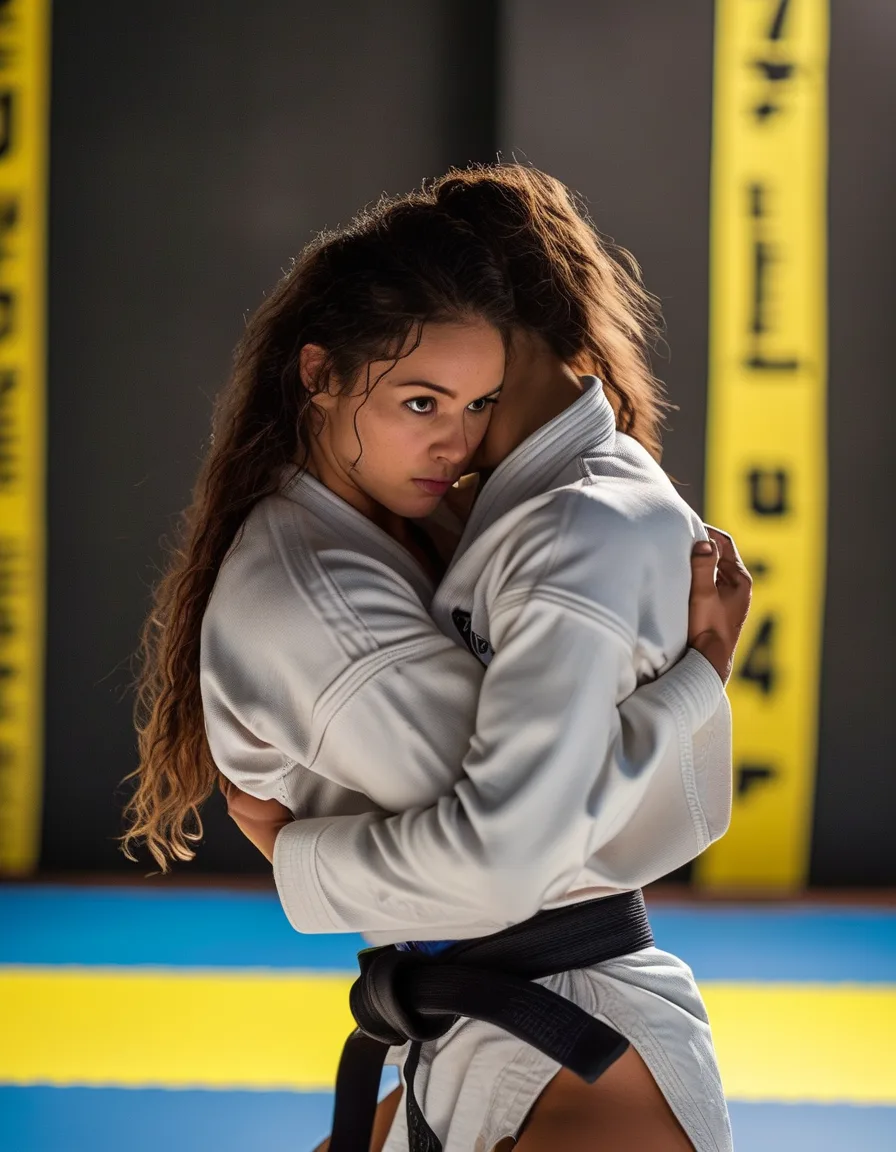
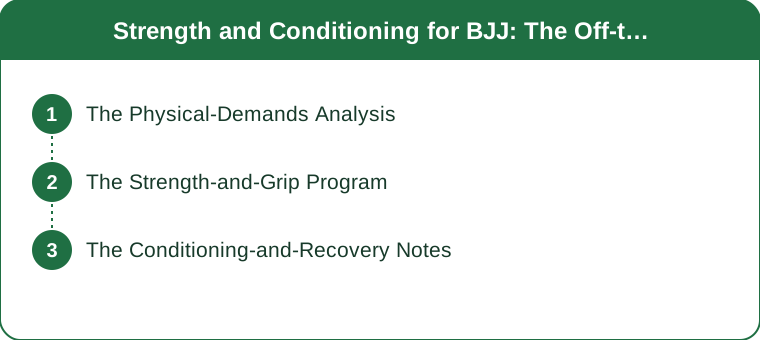
What Does BJJ Actually Demand From Your Body?
Five specific things — and knowing which they are stops you from training the wrong ones.
1. Grip endurance, first and hardest. Gi grips are relentless isometric work, and grip is the thing that fails before anything else in a long roll. Once your hands go, your entire gi game goes with them.
2. Pulling strength. BJJ is a pulling sport. You pull sleeves, collars, heads, and hips. Almost nothing in jiu-jitsu is a bench press. If your training program is press-heavy, it’s the wrong program.
3. Hip and core power. Bridges, shrimps, guard retention, sweeps — the hips drive nearly every offensive and defensive movement. Anti-rotation core strength matters more than flexion strength here.
4. Muscular endurance over max power. A roll is 5–8 minutes of sustained gripping, holding, and grinding. Peak one-rep strength has limited transfer; the ability to produce 60% of it repeatedly for six minutes has enormous transfer.
5. Strength in awkward positions. BJJ loads joints at angles no gym machine reproduces. Free weights, carries, and unilateral work build the durability that machine circuits don’t.
Underneath all of it sits the real priority: injury prevention. The best physical attribute in jiu-jitsu is being on the mat consistently for years, and that’s a durability question.
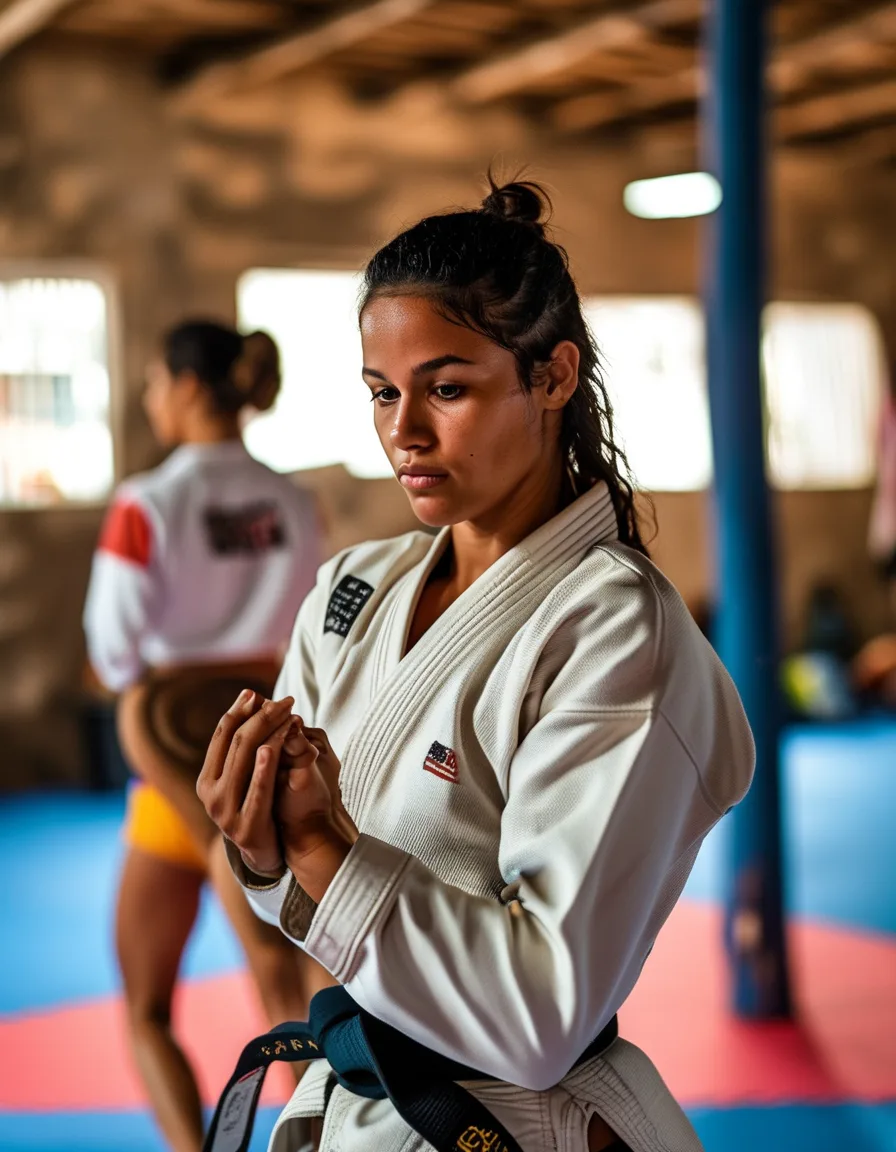
What Should a BJJ Strength Program Look Like?
Two sessions a week, 45 minutes each, for someone training BJJ 3–4 times weekly. Three sessions only if your mat time is 2 or fewer.
Session A — Pull and hinge focus
- Deadlift or trap-bar deadlift: 3 sets of 5
- Weighted or assisted pull-ups: 4 sets of 5–8
- Single-arm dumbbell row: 3 sets of 10 per side
- Hip thrust or heavy glute bridge: 3 sets of 10
- Farmer’s carry: 4 trips of 40 meters, heavy
Session B — Squat, push and core focus
- Goblet or front squat: 3 sets of 8
- Overhead press: 3 sets of 8
- Pallof press (anti-rotation): 3 sets of 12 per side
- Suitcase carry: 4 trips of 30 meters per side
- Hanging knee raise: 3 sets of 10
Grip work — add to every session:
- Dead hang: 3 sets to near-failure (target 45+ seconds)
- Towel hang or gi-towel pull-ups: 3 sets
- Thick-bar or towel-wrapped rows
Grip endurance is the highest-return single addition for gi players and the one most commonly missing from generic gym programs.
The critical rule: don’t lift to failure the day before hard rolling. Strength work should leave you at about 80% — you’re building a support system, not competing in the weight room.
What Conditioning Actually Transfers to Rolling?
Match the energy system to the sport.
BJJ is intermittent: bursts of maximal effort inside a long sustained grind. That’s a glycolytic and aerobic mix, not pure steady-state and not pure sprinting.
What works:
- Intervals in the 30–90 second range with 1:1 or 1:2 work-to-rest. Assault bike, rower, hill sprints, kettlebell complexes. 2 sessions weekly maximum, and only if your mat time allows.
- One easy aerobic session weekly — 30–40 minutes of zone 2 running, cycling, or brisk walking. Unfashionable and genuinely useful: aerobic base is what lets you recover between bursts within a roll.
What to be careful with: adding hard conditioning on top of 4 BJJ sessions and 2 lifting sessions. That’s 6–7 hard sessions a week, and most people’s recovery can’t fund it. Rolling itself is conditioning. If you’re gassing, the first fix is usually better breathing and relaxation under pressure, not more intervals.
The 5 Mistakes Everyone Makes With BJJ Strength Training
- Training like a bodybuilder. Chest, biceps, and machine circuits do almost nothing for jiu-jitsu. Pull, hinge, carry, and grip.
- Lifting heavy the day before competition class. Fatigued strength training bleeds directly into your rolling quality, and quality mat time is the thing that actually makes you better.
- Chasing a bigger one-rep max. Useful up to a point, then irrelevant. Muscular endurance and grip stamina transfer far more.
- Skipping neck and shoulder prehab. BJJ loads the neck constantly. Two minutes of controlled neck isometrics and 15 band pull-aparts per session is cheap insurance against the injury most likely to cost you three months.
- Adding volume instead of subtracting. The most common mistake among improving grapplers: 4 classes, 3 lifts, 2 conditioning sessions, no rest days, and then confusion about why they’re getting worse. Total load is the variable nobody tracks — and it’s the one that decides everything.
How Do You Recover Enough to Train Consistently?
Recovery isn’t a soft topic in BJJ. It’s the constraint that determines your mat time.
Sleep is the whole thing. 7–9 hours. Nothing on this list matters more, and no supplement substitutes for it. Grappling is high-volume, high-contact work and the adaptation happens overnight.
Protein. Roughly 1.6–2.2 g per kg of bodyweight daily supports repair from both lifting and mat time. Most people under-eat protein when training hard.
One genuine rest day weekly, minimum. Not “light rolling.” Off.
Manage total load, not individual sessions. Count everything: mat time, lifting, conditioning, and life stress. If work is brutal that week, drop a session rather than pushing through — this is what separates people who train for a decade from people who train for eight months.
Address niggles early. The tweaked finger, the sore neck, the shoulder that clicks. Tap early, train tomorrow. Every grappler who’s been out for six months can name the day they should have stopped and didn’t.
Frequently Asked Questions
How many days a week should you lift for BJJ?
Two sessions weekly for most people training BJJ 3–4 times a week. Three is reasonable if your mat time is 2 or fewer sessions. Beyond that, total weekly load usually exceeds what recovery can support, and mat performance drops.
Should you lift before or after BJJ training?
After, or on separate days. Lifting first leaves you fatigued for the technical work, and technique quality is what actually drives improvement. If you must combine them on one day, do BJJ first and keep the lifting session short and submaximal.
What’s the best grip training for jiu-jitsu?
Dead hangs, towel hangs, thick-bar or towel-wrapped rows, and heavy farmer’s carries. Aim for time under tension rather than reps — a 45-second dead hang transfers better than 20 quick grip-squeezer reps, because gi gripping is sustained isometric work.
Do you need cardio if you train BJJ several times a week?
Often not much. Rolling itself provides substantial conditioning. One easy aerobic session weekly builds the base that helps you recover between bursts, but adding hard intervals on top of 4 BJJ sessions plus lifting usually costs more in recovery than it returns.
When to Check With a Professional
Neck pain with any radiating symptoms, numbness, or weakness in the arms needs medical assessment rather than more prehab — cervical injuries in grappling are the ones worth being conservative about. The same applies to any joint that gives way, locks, or swells after a session.
If you have a history of shoulder dislocation, disc injury, or a knee ligament repair, work with a physiotherapist to structure your lifting rather than following a generic program. And get medical clearance before starting heavy strength work if you have cardiovascular risk factors or haven’t trained in a long while.
TL;DR:
- BJJ demands grip endurance, pulling strength, and hip/core power — in that order. Pressing and bodybuilding splits don’t transfer.
- Two 45-minute sessions weekly: pull/hinge day and squat/push/core day, with grip work in both.
- Add dead hangs and towel hangs to every session. Grip is what fails first in a long roll.
- Conditioning: 30–90 second intervals twice weekly max, plus one easy aerobic session. Rolling is already conditioning.
- Sleep 7–9 hours, eat 1.6–2.2 g protein per kg, take a real rest day, and track total load — not individual sessions.
Keep Reading
This article is for general informational and styling purposes only. Fit, sizing, and product availability may vary.